
Table of Contents
For new residential projects, SAP calculations play a direct role in determining the final Energy Performance Certificate (EPC).
The Standard Assessment Procedure (SAP) assesses a dwelling’s expected energy performance using information about its building fabric, heating, ventilation, hot water, lighting and renewable technologies. The completed assessment then provides the data used to produce the property’s energy efficiency rating and EPC.
In this guide, we’ll explain how SAP calculations impact EPCs, what affects the assessment, and why considering SAP early can make the route to Building Regulations compliance and certification more straightforward.
If you’re planning a residential development, self-build or conversion, Falcon Energy provides SAP calculations and EPC certificates nationwide from design through to completion. For a free, no-obligation quote, please call 01403 253439.
What are SAP calculations?
SAP is the government-approved methodology used to assess the energy performance of new dwellings, including houses and self-contained flats. It’s used for residential buildings rather than non-domestic buildings, which are assessed using a different methodology.
A SAP assessment uses standardised assumptions and detailed information about the dwelling to calculate its expected energy and environmental performance.
The SAP calculation process considers factors including:
- Property size and layout
- Building fabric and insulation
- Windows and doors
- Airtightness
- Heating and hot water systems
- Ventilation
- Fixed lighting
- Renewable energy, such as solar panels
- Fuel types
Together, these factors determine the dwelling’s expected energy demand and overall energy efficiency.
For new dwellings in England, SAP 10.3 is currently the approved methodology under the relevant Building Regulations. Please be aware that the Home Energy Model (HEM) is being developed as the future replacement for SAP. Learn more in our HEM vs SAP guide.
How SAP calculations impact EPCs
For a newly constructed dwelling, the SAP assessment provides the calculation behind the final Energy Performance Certificate (EPC).
The process typically works as follows:
- Building design and specification – plans, construction details and building services are provided for assessment.
- Design-stage SAP assessment – the assessor calculates the dwelling’s expected energy performance.
- Completion-stage assessment – the SAP assessment is updated using the final construction details so it reflects the dwelling as built.
- Final EPC – the completed SAP assessment provides the data used to produce the EPC and its energy efficiency rating.
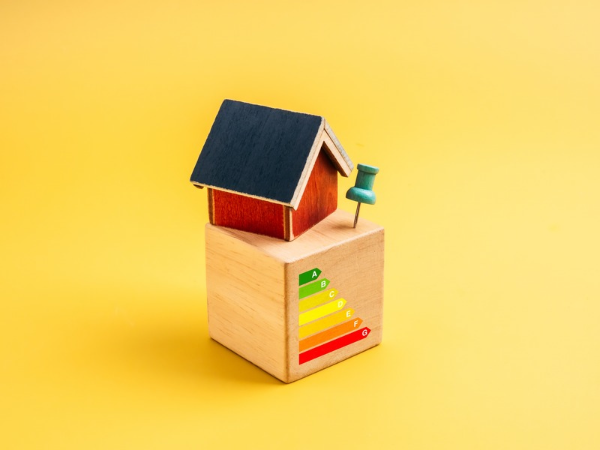
The SAP assessment produces a numerical SAP score, with a higher score indicating greater energy efficiency. This is then reflected in the familiar A–G EPC rating, with A representing the most energy-efficient properties.
Changes to insulation, heating, ventilation, airtightness or renewable energy provision can affect the dwelling’s calculated performance and, in turn, the final EPC rating.
What parts of a property can affect the SAP calculation and EPC?
A property’s SAP rating is based on how its fabric, services and energy systems perform together.
| Key factor | How it can affect energy performance |
| Building fabric | Insulation and thermal performance influence heat loss through walls, floors and roofs. |
| Windows and doors | U-values, glazing and specification affect heat loss and solar gains. |
| Airtightness | Reducing uncontrolled air leakage can improve calculated energy performance. |
| Heating systems | The type, fuel and efficiency of the system affect energy consumption and carbon emissions. |
| Hot water | Water-heating efficiency and system design form part of the assessment. |
| Ventilation systems | The type and efficiency of ventilation can influence overall energy demand. |
| Solar panels | On-site renewable electricity generation can improve calculated energy performance. |
| Lighting | Efficient fixed lighting can reduce calculated electricity demand. |
These factors combine to influence the final SAP rating and, in turn, the property’s EPC rating.
Why design-stage SAP calculations matter
SAP calculations should be considered early in a project, while there is still time to make changes if needed.
At the design stage, the assessor uses building plans and proposed specifications to assess how the dwelling is expected to perform. This can highlight issues with insulation, glazing, heating, ventilation, airtightness or renewable energy before construction progresses too far.
Identifying these issues early makes changes easier and less costly than altering the specification once the build is nearing completion. The design-stage assessment also indicates whether the proposed dwelling is likely to meet the relevant energy efficiency requirements under the current Building Regulations and provides supporting information for Building Control.
Where required, design-stage calculations can also produce a Predicted Energy Assessment (PEA), which indicates the property’s expected energy performance before construction is complete.
What happens if the specification changes during construction?
If the specification changes during construction, those changes need to be reflected in the completion-stage SAP assessment so the final calculation matches the completed dwelling.
Alterations to insulation, windows, heating, ventilation, construction materials or renewable energy technologies can affect the dwelling’s calculated energy efficiency, energy demand or carbon emissions. Keeping accurate records of product specifications, construction details, test results and installed building services helps the SAP assessor complete the as-built assessment correctly.
Where significant changes are proposed, discussing them with the assessor before installation can help identify whether they could affect the project’s SAP compliance targets.
For projects involving alterations to existing properties, you can also read our guide to SAP calculations for extensions and conversions.
How SAP calculations affect the final EPC rating
The final SAP assessment determines the calculated energy performance used to produce the new dwelling’s EPC rating.
A higher SAP score generally reflects a more energy-efficient property and is represented within the familiar A–G EPC scale. The result is based on the combined performance of the building fabric, heating, hot water, ventilation, lighting and renewable technologies.
Measures that improve the dwelling’s calculated energy efficiency can also bring wider benefits, potentially helping to:
- Reduce energy consumption
- Lower energy costs
- Reduce carbon emissions
- Reduce the environmental impact of energy use
However, an EPC isn’t a prediction of a particular household’s actual bills. Real-world energy use will vary based on factors such as occupancy, behaviour, weather, and energy tariffs.
The purpose of SAP is therefore not simply to achieve a higher EPC rating, but to provide a standardised assessment of the property’s energy performance and support compliance with the relevant standards.
SAP, Building Regulations and EPCs: what’s the difference?
SAP calculations, Building Regulations and EPCs are closely connected, but each has a different role in a new residential project.
| Aspect | SAP calculations | Building Regulations | Energy Performance Certificate |
| Purpose | Assesses the dwelling’s calculated energy performance | Sets the standards the project must meet | Records the completed property’s assessed energy performance |
| When | At design stage and again at completion | Throughout design and construction | Required when a new dwelling is completed, and also when properties are sold or rented |
| Main role | Supports compliance and provides the data used for the EPC | Establishes required energy efficiency standards | Gives owners, buyers and tenants a standardised view of the property’s energy efficiency |
In practice, SAP helps demonstrate whether the dwelling meets the relevant energy efficiency requirements and provides the assessment data used to produce the final EPC. The EPC then gives homeowners, buyers, landlords and tenants a clear indication of the property’s assessed energy performance.
Neither the SAP assessment nor the EPC replaces Building Control approval.
Does SAP apply to existing homes?
Full SAP is mainly used for new dwellings, where detailed design and construction information is available.
Existing homes in England and Wales are generally assessed for EPC purposes using Reduced Data SAP (RdSAP). This is designed for existing properties where the assessor usually doesn’t have access to the same detailed plans and specifications available for a new build.
This means an existing homeowner arranging an EPC does not normally need the same full SAP assessment used for a newly constructed dwelling.
Different EPC requirements can also apply to existing properties, including homes in the private rented sector and those covered by relevant Minimum Energy Efficiency Standards (MEES).
Summary
SAP calculations directly affect EPCs for new residential properties. The assessment considers the dwelling’s fabric, heating, ventilation, hot water, lighting and renewable technologies to calculate its energy performance and produce the SAP score that feeds into the final EPC rating.
Carrying out SAP calculations at the design stage can highlight potential issues early, while the completion-stage assessment ensures the final result reflects the property as it’s actually built. Any specification changes made during construction must therefore be included in the final assessment.
SAP also supports Building Regulations compliance, but it is distinct from both Building Control approval and the EPC itself. The EPC records the completed property’s assessed energy performance in a standardised format for owners, buyers and tenants.
Book SAP calculations and EPC services with Falcon Energy
Falcon Energy provides professional SAP calculations and EPC certificates for new-build residential projects, extensions and conversions.
Our experienced assessors can support your project from the initial design-stage assessment through to completion, helping you understand your SAP requirements and the information needed for the final EPC.
For advice or a free quote, contact us, and we’ll be happy to help.
Frequently Asked Questions
Do SAP calculations determine an EPC rating?
For a new dwelling, the completed SAP assessment provides the calculated energy-performance information used to produce the Energy Performance Certificate. The EPC rating therefore reflects the overall performance calculated using the SAP methodology.
What information does a SAP assessor need?
A SAP assessor typically needs detailed plans and specifications covering the building fabric, insulation, windows, heating, hot water, ventilation, lighting and any renewable technologies. Completion-stage information is also required, so the final assessment reflects the finished dwelling.
When should SAP calculations be carried out?
Consider SAP from the design stage of a new residential project. Initial calculations allow early assessment of the proposed design, while the completion-stage assessment reflects the property as constructed and provides the information required for the final EPC.