
Air Tightness Testing
For residential and commercial properties
Whether you’re working on a new build home, a multi-plot development or a commercial project, air tightness testing gives building control the evidence it needs under Part L and shows you exactly where the building is losing heat. Falcon Energy was established in 2006 and tests everything from single dwellings to large residential and commercial developments across the UK.
Call us on 01403 253439, Mon – Fri 9.00 – 17.00. We’ll book your test at a time that suits your programme and prepare your report as quickly as possible.

IATS affiliated

Fully trained, qualified testers, established 2006

Nationwide, new-build testing

Free, no obligation quotes
Air Pressure Testing for residential and commercial buildings
Air tightness testing, air pressure testing and air leakage testing all describe the same thing: a controlled way of measuring how much air escapes through gaps and cracks in a building’s fabric. A building that leaks more air than it was designed to is harder and more expensive to heat, and may not achieve building control sign-off.
Under the current Approved Document L, air tightness is one of the measures used to show a new home meets the energy efficiency standards of the Building Regulations. Finding and sealing air leakage paths can help reduce heat loss and the CO₂ emissions that come with it.
Read our guide to common sources of air leaks.
How we test air tightness
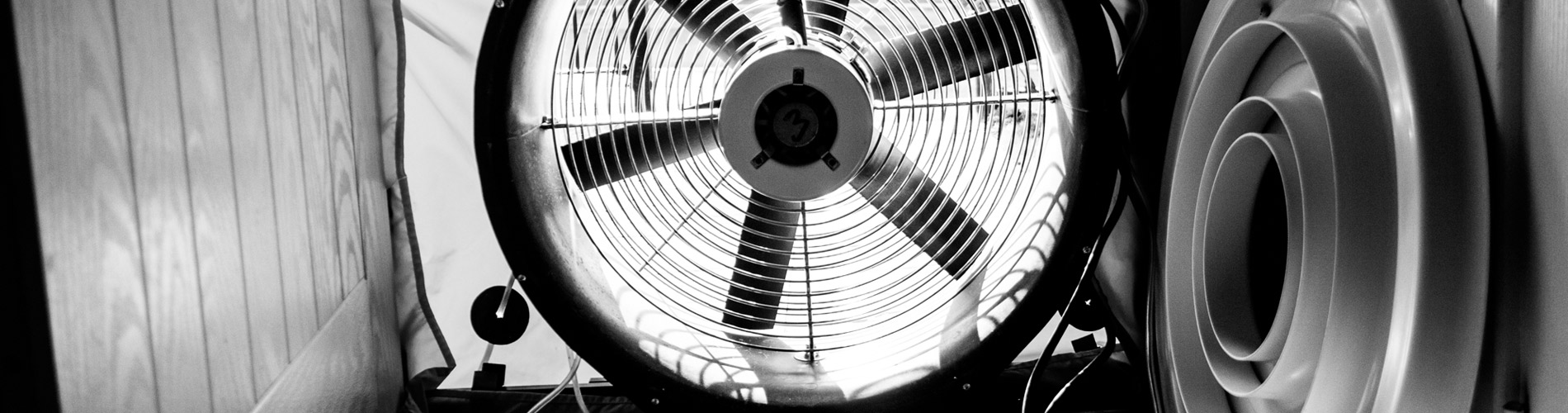
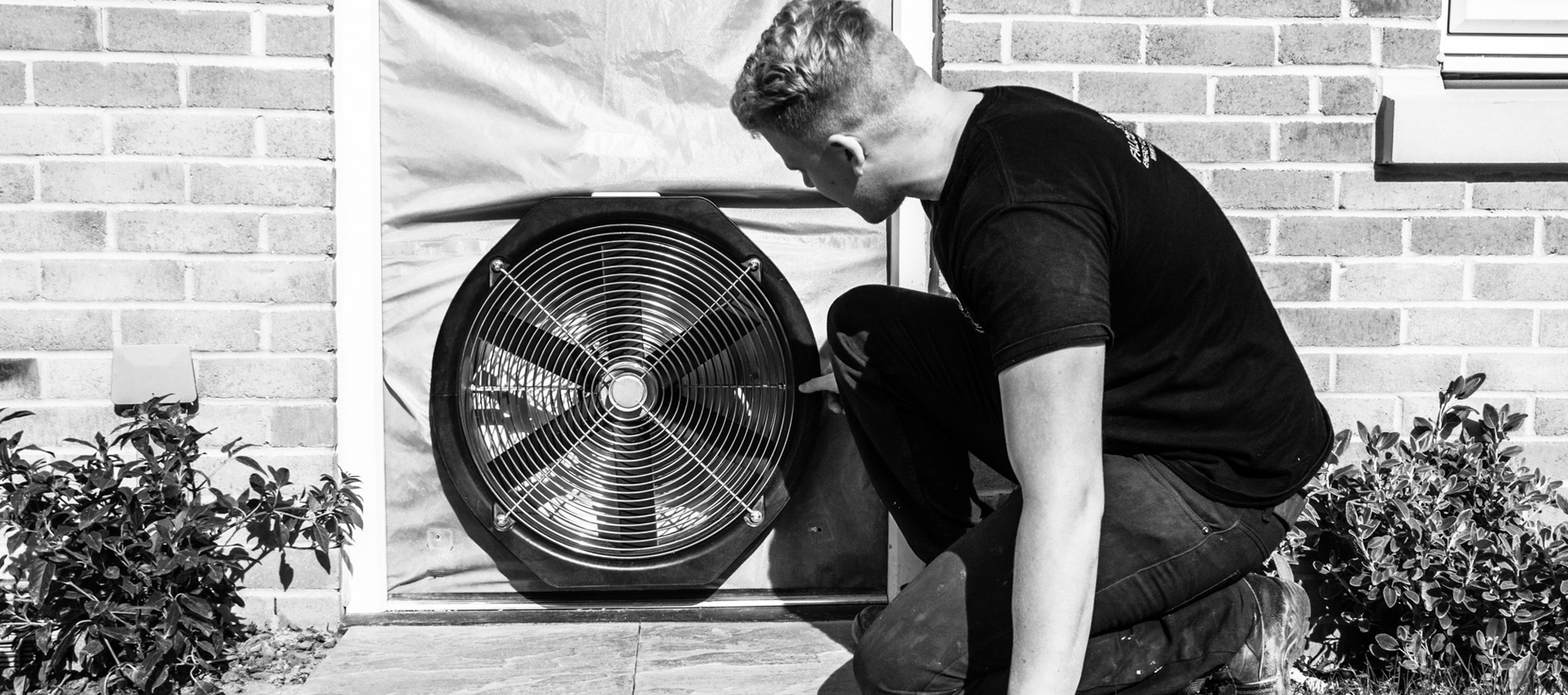
We measure air leakage by temporarily fitting a large fan to an external doorway and using it to create a pressure difference between the inside and outside of the building. Here’s what that involves:
- We book your test. We’ll arrange a visit at a time to suit you. The building needs to be complete and empty, with external doors and windows closed and any vents temporarily sealed as the test standard requires.
- We fit the fan and take readings. The fan changes the pressure inside the building in steps, and we record pressure, airflow and environmental readings at each one.
- We calculate your result. We use those readings to work out how much air leaks through the building at the standard reference pressure of 50 pascals (Pa), divided by the total area of the building envelope. Your result is expressed as m³/(h·m²) @ 50Pa, the figure building control compares against your design.
- We leave the building as we found it and prepare your report. We aim to turn reports around as quickly as possible.
Why choose Falcon Energy for Air Pressure Testing?
Our technicians are fully qualified and affiliated to IATS, the Independent Airtightness Testing Scheme, and Falcon Energy has worked with developers and contractors since 2006.
An air pressure test from Falcon Energy gives you:

A clear, measured picture of where your building is losing air

Test evidence to support your Part L submission to building control
Practical advice on reducing air leakage and the heat loss that comes with it
We’ll offer advice from the start of your project, domestic or commercial, working with you, your architects and your builders to give your build the best chance of passing first time. Our guide on when to consider air tightness testing for new build developments explains why early involvement matters, and how to achieve airtightness in buildings covers the build details that make the difference.
FREQUENTLY ASKED QUESTIONS
Testing takes place once the building is complete, but it’s worth speaking to an air tester at the design stage. If we’re involved early, we can suggest details and sequencing that help the building perform well on test. That gives the finished building a much better chance of passing and achieving building control sign-off first time.
Yes. In England, Regulation 43 of the Building Regulations and the current Approved Document L, which took effect on 15 June 2022, mean every new dwelling should have its own air pressure test. The old approach of testing a sample of each house type no longer applies. Some long-running sites approved under the previous rules may still be covered by transitional arrangements, so check with your building control body if your project started before then.
Not to comply with Part L. In England and Wales, Regulation 43 of the Building Regulations requires pressure testing when a new building is erected. Extensions, conversions and other work to existing homes are covered by separate guidance in Approved Document L, which asks for new elements to be well sealed and draught-proofed rather than tested. We can still test an extension or conversion if you’d like a measured result.
The 2026 edition of Approved Document L, which introduces the Future Homes Standard, comes into force in England on 24 March 2027 (24 September 2027 for higher-risk building work). Homes with a building control application or notice submitted before 24 March 2027 can stay on the current rules, as long as work on that building starts before 24 March 2028. The notional dwelling used to set energy targets assumes a tighter air permeability of 4 m³/(h·m²) @ 50Pa, while the limiting value for a new dwelling stays at 8.0. Designs built around a low air permeability need site detailing to match, so testing and early advice become more important. If you have developments that will be built under the new standard, talk to us about your SAP calculations and testing programme now.
Airtight homes lose less heated air through gaps in the building fabric. That reduces the energy needed to keep the home comfortable and the carbon dioxide emissions from heating, which can lower running costs for occupants over time. Airtight homes still need good ventilation, which is why air tightness and Part F ventilation work together.
Air tightness testing is required under Part L of the Building Regulations for new dwellings. Heating homes is a significant source of UK carbon emissions, so cutting heat loss from new homes is part of how the UK aims to meet its emissions targets. For developers, the test result is part of the evidence building control needs before sign-off.
Air leakage paths are uncontrolled, unintended routes for air to move in or out of a building, such as cracks, gaps around service penetrations, or poorly sealed joints. They’re the opposite of controlled ventilation through purpose-built vents. Once found, they should be sealed to reduce air leakage.
The cost depends on the size and type of building and how many units need testing on a development. We’ll give you a free, no obligation quote.
Our latest news
About Air Tightness Testing
BOOK AIR PRESSURE TESTING TODAY
For a free, no obligation quote on air tightness testing for your residential or commercial project anywhere in the UK, or to discuss your requirements, call us on 01403 253439 or email info@falconenergy.co.uk. Alternatively, fill out our contact form and a member of the Falcon Energy team will be in touch.
Contact Us


Contact us for your next project
Reach out to us during the initial planning phase of your upcoming project, and let us be your proactive team for achieving energy efficiency!
No project is too complex, so contact us today!