
What does an EPC Assessment Involve?
Table of Contents
An EPC assessment is a non-intrusive survey of your property carried out by an accredited energy assessor. They record details such as construction, heating, insulation, lighting and glazing, then use that information to calculate your property’s energy efficiency and produce an Energy Performance Certificate (EPC). For most homes the visit takes around an hour, and the certificate is valid for 10 years.
If you are selling, letting or building a property, you will almost certainly need a domestic EPC assessment. Below, we explain exactly what happens during the assessment, what the assessor checks, how long it takes, how to prepare and how to book, for both domestic and commercial properties.
Watch: What happens during an EPC assessment?
Ready to book your EPC?
Key takeaways
- An EPC assessment is a non-intrusive survey carried out by an accredited Domestic Energy Assessor.
- It rates a property’s energy efficiency from A (most efficient) to G (least).
- A typical visit takes around an hour; you receive the certificate within a few days.
- An EPC is valid for 10 years and is needed to sell, let or build a property.
- The current minimum to let a home (England & Wales) is EPC E, with a planned rise to EPC C by 1 October 2030.
- Domestic properties use the standard EPC method; commercial properties use SBEM. Falcon Energy covers Sussex, Surrey and Kent.
What is an EPC assessment?
An Energy Performance Certificate measures how energy efficient a property is and rates it on a sliding scale from A to G, where A is the most efficient and G is the least. The certificate also sets out recommendations for improving the property’s energy performance.
You will typically need an EPC when you:
- Sell a property, to go alongside the listing so buyers can see how efficient the home is.
- Let a property. Landlords are legally required to hold a valid EPC, and under the Minimum Energy Efficiency Standards (MEES) most privately rented homes in England and Wales must currently have an EPC rating of at least E to be let, unless a valid exemption is registered.
- Complete a new build or certain conversions, where an EPC is produced as part of the building control process.
If you are unsure whether your property needs one, see our guide on when an EPC is not required.
A note for landlords on minimum ratings: The current minimum to let a home in England and Wales is EPC E. The government has confirmed plans to raise the minimum standard for privately rented homes to EPC C (or equivalent) by 1 October 2030, with the supporting legislation expected to follow. The way EPCs are calculated is also due to change. We would always recommend checking the latest position on GOV.UK, and our complete EPC guide for landlords covers this in more detail.
What happens in an EPC assessment?
During a standard domestic EPC assessment, an accredited energy assessor needs access to your whole property so they can complete the energy assessment accurately. The survey is visual and non-intrusive: the assessor records what they can see and measure, takes photographs as evidence, and notes the construction and services throughout the property.
Working room by room, the assessor will typically look at:
- The age, construction and size of the property. Build date and construction type give a strong indication of how the property was originally built and insulated.
- Primary heating systems. The boiler or main heat source, plus heating controls such as thermostats and timers, and how efficient they are.
- Insulation. Whether there is cavity wall and loft insulation, and the level at which this can be established.
- Secondary and renewable heat sources. Anything from a wood burner to solar panels or a heat pump.
- Lighting. The proportion of energy-saving or low-energy light fittings in use.
- Windows and glazing. Whether the property has double or triple glazing, or single-glazed units.
The assessor combines these findings using approved government software to produce your final EPC rating. Alongside the certificate, you receive a recommendation report suggesting improvements that could raise the property’s energy performance. If you want to act on those, see our guide to improving your EPC rating.
What does an EPC assessor check, and what are they looking for?
It helps to know that the assessor is not inspecting the property’s condition or safety, and it is not a survey of repairs. They are gathering the specific evidence the energy model needs.
In practice, that means they will want to see (or have details of):
- The main heating system and its controls, and the hot water system.
- Loft access, to check insulation depth where possible.
- The type of walls and any insulation that can be confirmed.
- Window types and the approximate proportion of glazing.
- Any low-energy lighting and renewable technologies.
Where something cannot be seen, the assessor records the most likely option based on the property’s age and construction, following the assessment conventions. This is why keeping hold of paperwork (see preparing below) can help: documented improvements can be counted where they might otherwise be assumed.
What does an EPC assessor do, and are they accredited?
An EPC for a home must be produced by an accredited Domestic Energy Assessor (DEA). The accreditation confirms the assessor is qualified to carry out the survey and lodge the certificate on the national EPC register.
At Falcon Energy, your assessment is carried out by Domestic Energy Assessors accredited with Elmhurst Energy Systems (one of the government-appointed accreditation schemes), so you can be confident your certificate is produced and lodged by a fully qualified professional. You can check any assessor on the government EPC register. We have assessed all types of property across Sussex, Surrey and Kent since 2006, including listed and older buildings where the assessment needs particular care.
You can check that any assessor is qualified before you book, which we cover under booking below.
How long does an EPC assessment take?
The size of the property is the main factor. For a typical home, our assessor will usually be on site for around an hour, moving through the different areas of the property. The assessment is non-intrusive, so you will not be expected to move anything, and you do not need to follow the assessor around.
Once the visit is complete, it takes a few days to finalise the calculations and produce the report. As soon as the EPC is ready we send it to you, and you receive an official certificate showing your final rating.
How do I prepare for an EPC?
Because it is a non-intrusive assessment, there is no need to spend hours preparing your home. A few simple steps will make the process smoother and help the assessor record your property accurately:
- Finish any works first. An EPC reflects the property at the time of the visit and cannot account for work retrospectively, so make sure improvements are complete before the assessment.
- Have your paperwork ready. Keep evidence of upgrades, for example a FENSA certificate for replacement glazing, or guarantees for loft or cavity wall insulation. Documented work can be credited where it might otherwise be assumed.
- Provide clear access. The assessor will need to reach the loft hatch, boiler and main rooms.
If you are hoping to improve your rating before the assessment, our guide on how to improve your EPC rating sets out practical options. For a fuller checklist, see preparing for an EPC assessment.
What will I receive, and how long is an EPC valid for?
After the assessment you receive two things: your Energy Performance Certificate showing the A–G rating, and a recommendation report outlining improvements that could increase the rating.
An EPC is valid for 10 years, so it can be used for a sale or letting at any point during that period. If you have since improved the property, you may choose to have a new assessment before the 10 years are up, to capture the higher rating. A stronger EPC can also be a useful selling point, as buyers and renters increasingly check a property’s energy performance.
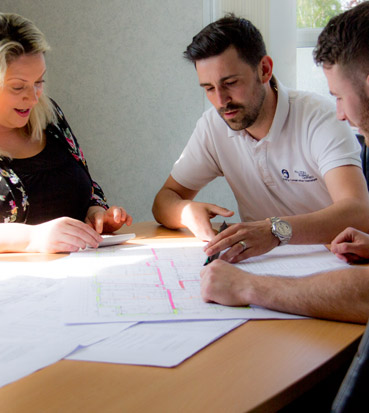
EPC assessments for commercial property
The process above describes a domestic EPC. Commercial and non-domestic buildings are assessed differently, using SBEM (Simplified Building Energy Model) calculations rather than the domestic method. If you need an EPC for a commercial property, see our SBEM calculations for commercial properties and our guide to non-domestic EPC assessments.
Checking an existing EPC
If you only want to find out whether a property already has a valid EPC, or look up an existing certificate, you can search the national register rather than book a new assessment. We explain how in our guide to the government EPC register.
How do I book an EPC?
Booking an EPC is straightforward. Before you instruct anyone, check that the company uses a fully qualified Domestic Energy Assessor. You can verify an assessor on the national EPC register, which gives you peace of mind that you are working with accredited professionals.
To book, contact a domestic energy assessor with a few details about your property, such as the address and size. The assessor will confirm what is needed and arrange a convenient appointment.
If you are in Sussex, Kent or Surrey and ready to book your EPC, call our expert assessors on 01403 253439 or get in touch. You can also read more about domestic EPCs for landlords and homeowners, or find out how much an EPC costs.



Working with Falcon Energy
Established in 2006, Falcon Energy is a Sussex, Surrey and Kent energy consultancy providing EPCs and a full range of energy assessment and compliance services. We work on all property types, including listed buildings, and support developers with EPCs and SAP calculations for new builds across the South East. Our close links with estate agents mean we can turn around an EPC quickly for a sale and provide accurate floor plans to go alongside your listing.
To book an EPC, get in touch with our team or call 01403 253439.
Frequently asked questions
How long does an EPC assessment take?
For a typical home, the assessor is usually on site for about an hour. The certificate follows within a few days once the calculations are complete.
Is an EPC assessment intrusive?
No. It is a visual, non-intrusive survey. You will not need to move belongings, and nothing is dismantled or damaged.
How long is an EPC valid for?
An EPC is valid for 10 years and can be used for a sale or letting at any time within that period.
Who can carry out an EPC?
A domestic EPC must be produced by an accredited Domestic Energy Assessor (DEA), who lodges the certificate on the national register.
Do commercial properties use the same assessment?
No. Commercial and non-domestic buildings are assessed using SBEM calculations rather than the domestic method.